
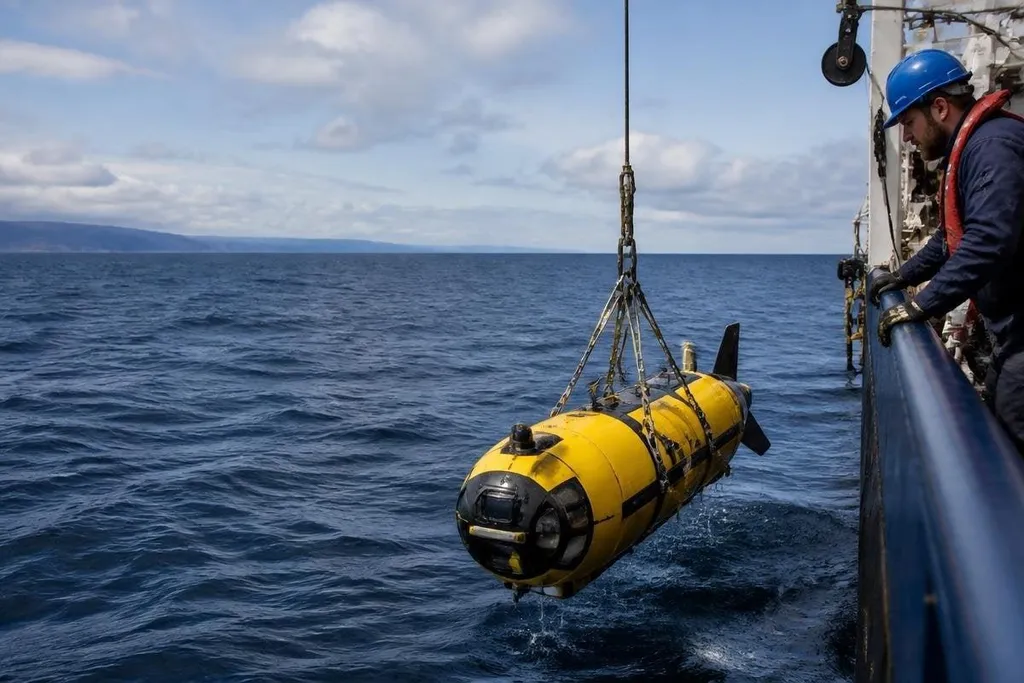
Marine robots work where radio signals fade, sunlight disappears, and a small leak can end a mission. The race is about reliable movement, sensing, communication, and recovery under water, not humanoid tricks on a stage.
Quick read
- Underwater robots rely on sonar and acoustic links because radio signals travel poorly through seawater.
- Pressure rises by about 1 bar for every 10 m of depth, so seals and housings must survive the planned dive.
- The best system depends on the task: inspection, mapping, sample collection, or rescue.
What “better” means under water
A marine robot has to locate itself without the signals used by land robots. Global Positioning System signals do not travel far through seawater, so an underwater vehicle may combine inertial sensors, depth sensors, cameras, and sonar. Sonar sends sound pulses and reads their return to find objects or the seafloor.
That sensor mix changes the work. A camera can show a crack in clear water, but it may fail in mud or darkness. Sonar can work through poor visibility, though its images usually contain less detail. A robot built for pipeline inspection needs a different sensor setup from one mapping a deep trench.
Communication creates another limit. Acoustic modems can send data through water, but they carry less data and often respond more slowly than radio links in air. A vehicle may need to store video on board, send short status messages, then return to a support vessel before the full files can be checked.
The machines in the race
Marine robots fall into a few useful groups. Remotely operated vehicles stay connected to a surface vessel through a tether, which supplies power and carries commands. That link gives an operator direct control, but the vessel, cable, and crew add cost and restrict movement.
Autonomous underwater vehicles travel without a live control link. They follow a planned route, record sensor data, and return when the mission ends or their battery reaches its limit. Their value comes from covering water without keeping a ship directly above them, but recovery still has to work in wind, waves, and poor visibility.
Surface robots face fewer pressure problems. They can carry larger batteries, cameras, radar, and satellite equipment while they move across the water. Their hard tasks include wave motion, saltwater corrosion, collision avoidance, and keeping sensors useful when rain or spray blocks the view.
For a practical reader, the difference matters more than the label. A tethered vehicle may fit a fixed inspection job, while an autonomous vehicle may fit a survey that covers a wide area. A surface robot may handle repeated patrols near a port without sending a crewed boat each time.
Where progress still breaks
Pressure is the first test. At 100 m, the outside pressure is about 10 bar above surface pressure. A housing, connector, or camera window that works in a tank may fail after repeated dives if water reaches a seal.
Energy is the next limit. Motors spend power fighting drag, holding depth, and correcting position. A larger battery adds run time but also adds weight, which can force the robot to use more thrust. Engineers have to balance those loads against the sensor package and the recovery plan.
Navigation can drift too. An inertial system measures movement from a known point, but small errors grow during a long mission.
Sonar maps, acoustic reference points, and occasional surface fixes can reduce that error. The result depends on water conditions, seafloor features, and the quality of the map used by the robot.
A marine robot’s position error belongs beside its map source, water conditions, and test date before you compare prices. Reports on marine robots from Robot 24 can connect those details to the machine and task, giving a buyer a clearer record before the next section weighs the cost and limits.
A buyer’s decision guide
Before choosing a marine robot, check these points:
- Task: Define the object, area, depth, and data the mission must produce.
- Control link: Decide if an operator needs live control or if a planned route is enough.
- Depth rating: Match the housing rating to the real dive depth, with room for error.
- Run time: Count travel, work, return, and recovery time rather than motor time alone.
- Recovery: Set out how the crew will find and lift the robot after a fault.
- Data review: Confirm where video and sonar files are stored and how quickly they can be checked.
I'd judge a marine robot by the mission it completes after the demo ends. A clean image, a stable route, and a safe recovery matter more than a long feature list.
The next proof point for this race is simple: how many missions can a system finish in salt water before a sensor, seal, battery, or recovery plan stops the work?