
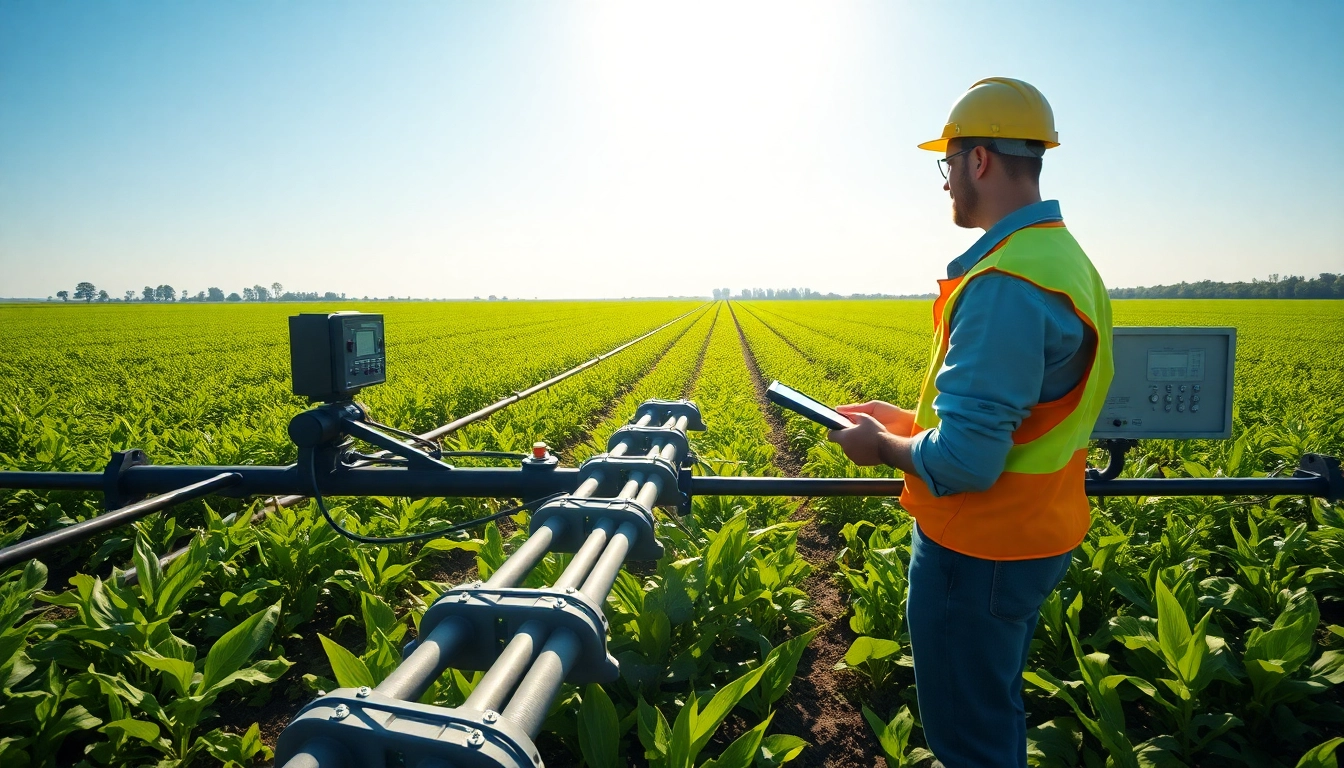
Understanding the Basics of Land Irrigation
What is Land Irrigation?
Land irrigation refers to the artificial application of water to land or soil, primarily for agricultural purposes. It is an essential agricultural practice aimed at providing crops with the necessary moisture to grow, especially in regions where rainfall is insufficient or unevenly distributed. This method plays a pivotal role in enhancing agricultural productivity and ensuring food security across the globe. By understanding the core principles of land irrigation, farmers can make informed decisions that promote efficient water usage and crop health. Utilizing various techniques and systems can also optimize resource management, resulting in sustainable practices. For more insights on effective land irrigation, the integration of technology and traditional methods can greatly enhance crop yields.
The Importance of Land Irrigation for Crop Growth
Land irrigation is crucial for crop growth as it directly influences water availability, plant health, and yield efficiency. Without adequate water supply, crops can suffer from water stress, leading to stunted growth and reduced productivity. In many areas, relying solely on natural rainfall proves inadequate, making irrigation an indispensable farming strategy. Efficient land irrigation ensures that crops receive the right amount of water at the right time, which is vital for processes such as photosynthesis, nutrient absorption, and overall health. By mitigating drought conditions, irrigation enhances food security and supports economic stability in agricultural regions.
Types of Land Irrigation Systems
Various land irrigation systems cater to different agricultural needs and environmental conditions. Some of the most common types include:
- Surface Irrigation: Involves the distribution of water over the soil surface through gravity. It is simple and cost-effective but requires careful management to avoid waterlogging and soil erosion.
- Drip Irrigation: A highly efficient method that delivers water directly to the plant roots through a network of tubing, helping to conserve water and reduce evaporation.
- Sprinkler Irrigation: Mimics natural rainfall by distributing water through a network of pipes and spray heads. It can be used for various crops and is adaptable to different terrains.
- Subsurface Irrigation: Involves burying the irrigation tubing beneath the soil surface, allowing for water delivery directly to the root zone, minimizing evaporation losses.
Each system has its advantages and drawbacks, and choosing the appropriate one depends on various factors, including climate, soil type, crop requirements, and available resources.
Benefits of Efficient Land Irrigation
Conserving Water with Smart Techniques
Efficient land irrigation techniques minimize water wastage and promote sustainability. For example, adopting drip or subsurface irrigation can reduce water consumption by delivering precise amounts directly to the plant roots. Smart irrigation systems equipped with sensors can monitor soil moisture levels and weather conditions, automatically adjusting water delivery accordingly. This level of precision ensures that crops receive just the right amount of water they need, conserving a vital resource, reducing operational costs, and maintaining soil integrity.
Improving Crop Yields through Precision Irrigation
Precision irrigation enhances crop yields by optimizing water application and reducing stress during critical growth stages. By employing technologies such as soil moisture sensors, farmers can schedule irrigation more accurately, avoiding overwatering or underwatering. Studies have shown that precision techniques can increase crop yields significantly, benefiting both the environment and the economy. By harmonizing water supply with crop requirements, farmers are better positioned to produce healthy, robust crops while maximizing profits.
Cost-Effectiveness of Modern Land Irrigation
Modern land irrigation systems offer cost-effective solutions that contribute to long-term savings. While initial setup costs might be high for advanced systems like drip irrigation, they often pay off in reduced water and labor expenses. Additionally, higher crop yields lead to increased revenue. By investing in modern technology, farmers can enhance their productivity and profitability, making land irrigation not only an essential practice but also a financially prudent one.
Challenges in Implementing Land Irrigation
Common Pitfalls in Design and Installation
Designing and installing an effective irrigation system can be fraught with challenges. Common pitfalls include inadequate planning, failing to consider the topography and soil type, and neglecting the local climate's influence on water needs. Without thorough designs and assessments, systems may lead to inefficient water use, possible crop damage, and increased maintenance costs. To avoid these issues, it is crucial for farmers to engage in comprehensive planning stages, assess soil and topographical conditions, and consult experts when necessary.
Weather Variability Impacting Irrigation
Weather variability poses a significant challenge to land irrigation practices. Unpredictable rainfall patterns and climate change can lead to droughts or excess moisture, adversely affecting crop health. Farmers need to adopt flexible irrigation systems capable of accommodating such fluctuations. Using historical weather data and predictive modeling can aid farmers in planning irrigation schedules more effectively and managing water resources wisely, despite varying weather conditions.
Maintenance and Upkeep of Irrigation Systems
Regular maintenance and upkeep of irrigation systems are crucial for optimal performance. Neglecting maintenance can lead to clogs, leaks, and malfunctions that waste water and impact crop health. Regular checks of system components, such as timers, filters, and emitters, should be part of a farmer’s routine operations. Establishing a maintenance schedule and documenting repairs can ensure that systems operate efficiently over time, ultimately preserving the initial investment.
Best Practices for Successful Land Irrigation
Innovative Technologies in Land Irrigation
Innovation in technology continues to transform land irrigation practices. The rise of smart irrigation systems, which utilize IoT (Internet of Things) sensors, allows for real-time monitoring of soil moisture and water usage. Automated systems that adjust irrigation schedules based on weather forecasts and soil conditions optimize water application, drastically reducing waste. Utilizing drones or satellite imagery can also assist farmers in assessing agricultural conditions from above, leading to better strategic decisions regarding irrigation practices.
Implementing Monitoring Systems for Precision
Adopting monitoring systems enhances the precision and efficiency of land irrigation systems. Soil moisture monitoring tools, coupled with weather data, can provide farmers with actionable insights to schedule irrigation more effectively. Advanced systems can also alert farmers to potential issues or inefficiencies, allowing for immediate corrective actions. Integrating analytics can help optimize water use and improve decision-making, leading to sustainable agricultural practices.
Integrating Sustainable Practices in Irrigation
Incorporating sustainable practices into land irrigation is essential for long-term agricultural viability. Techniques such as rainwater harvesting, using recycled water, and planting drought-resistant crop varieties contribute to sustainable irrigation practices. Farmers can also use cover cropping and crop rotation to maintain soil health and reduce the need for irrigation. By integrating these practices, agricultural enterprises can minimize their environmental footprint, ensure water conservation, and maintain productivity in the face of climate variability.
Measuring Success: Metrics for Land Irrigation
Key Performance Indicators for Irrigation Efficacy
Measuring the efficacy of irrigation systems is essential to ensure that they meet agricultural objectives. Key performance indicators (KPIs) such as water use efficiency, crop yield per acre, and cost per unit of water applied can provide valuable insights. By evaluating these metrics, farmers can assess whether their irrigation systems are functioning optimally and make necessary adjustments to improve performance.
Assessing Environmental Impact of Irrigation
The environmental impact of irrigation practices must be assessed to promote sustainability. Factors to consider include water salinity, soil degradation, and the ecological effects on surrounding waterways. Implementing practices that preserve and enhance environmental conditions should be a priority for responsible farmers. Environmental assessments on water usage and its effect on local ecosystems can foster greater understanding and implementation of sustainable irrigation practices.
Benchmarking Against Industry Standards
Benchmarking irrigation practices against industry standards can provide valuable insights into overall effectiveness. By comparing irrigation efficiency metrics with those of successful peers, farmers can identify areas for improvement. Participation in agricultural associations or networks that focus on irrigation can also provide access to best practices and innovations within the industry, leading to continually improved systems and outcomes.
Frequently Asked Questions (FAQs)
What is the best irrigation method for small farms?
Drip irrigation is often the best choice for small farms, as it conserves water, reduces weed growth, and delivers moisture directly to the plant roots.
How can I determine my irrigation needs?
Soil moisture sensors and historical climate data can help you assess your irrigation needs, ensuring optimal watering schedules for your crops.
How often should I irrigate my crops?
Irrigation frequency depends on weather, soil type, and crop structure. Monitoring soil moisture is key to determining the right schedule.
What are the benefits of using smart irrigation technology?
Smart irrigation technology optimizes water usage, reduces waste, saves labor, and can enhance crop yields by providing precise moisture delivery.
Is land irrigation sustainable?
Land irrigation can be sustainable when integrated with practices like rainwater harvesting, crop rotation, and the use of efficient systems to minimize waste.