
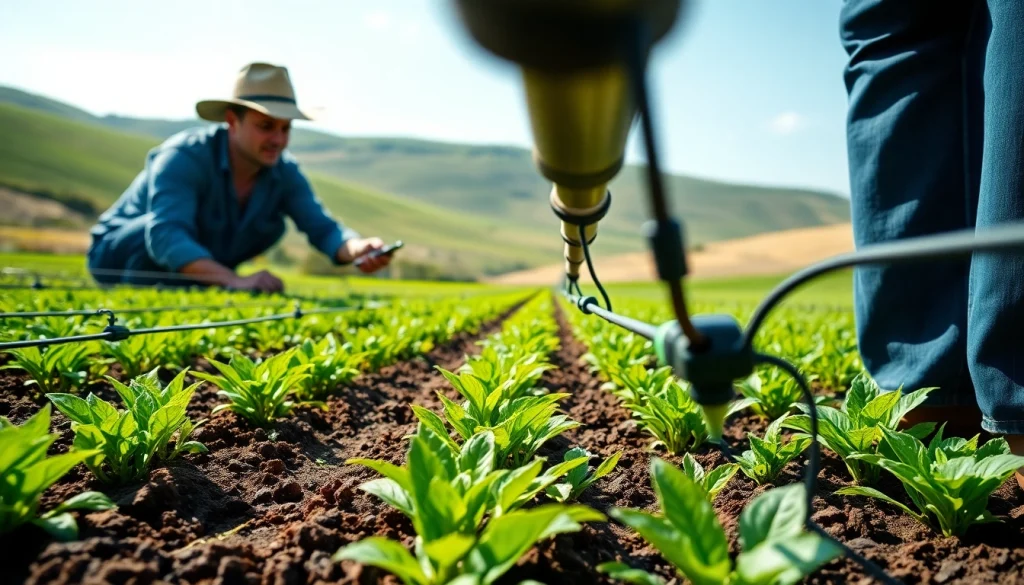
Understanding Land Irrigation
What is Land Irrigation?
Land irrigation is the process of applying controlled amounts of water to crops at needed intervals for optimal growth. This technique is essential for agriculture, especially in regions where rainfall is insufficient or irregular. By ensuring that crops receive sufficient water, land irrigation systems help to enhance agricultural productivity and sustainability. The need for land irrigation has increased over the years due to changing climate patterns and growing food demands.
Types of Land Irrigation Systems
Various systems are designed to suit different agricultural needs, soil types, and crops:
- Surface Irrigation: Water is distributed over and across land by gravity. This method includes furrow, basin, border, and flood irrigation.
- Drip Irrigation: Delivers water directly to the plant roots through a network of tubing and emitters, promoting water conservation.
- Sprinkler Irrigation: Simulates rainfall by spraying water over the crop using pipes and pumps. This method is effective for varied terrains.
- Subsurface Irrigation: Water is applied below the soil surface, which minimizes evaporation and ensures direct access to plant roots.
- Localized Irrigation: Involves small water applications close to plants, suitable for high-value and water-sensitive crops.
Importance of Efficient Water Use
Efficient water use in agriculture is paramount. Water scarcity and environmental regulations necessitate the need for practices that optimize irrigation techniques. Efficient systems can significantly reduce water waste, promote healthy soil, and ensure that crops receive adequate hydration without excess runoff that can lead to erosion or water pollution.
Benefits of Land Irrigation
Improved Crop Yields
One of the most significant advantages of effective land irrigation is the improvement of crop yields. Adequate and controlled water supply ensures that crops have the moisture needed for photosynthesis, nutrient uptake, and overall growth. For instance, farmers who implement modern drip irrigation have reported yield increases of up to 30% in some cases, significantly enhancing food production efficiency.
Soil Moisture Retention
Land irrigation helps maintain optimal soil moisture levels that are essential for growing crops. Techniques like mulching along with irrigation systems can significantly enhance soil moisture retention, preventing drought stress during dry spells. This becomes particularly important in arid and semi-arid regions where natural rainfall cannot be relied upon.
Sustainable Water Management
Implementing efficient land irrigation systems supports sustainable water management practices. Through techniques such as rainwater harvesting and recycling wastewater for irrigation, farmers can reduce reliance on depleting aquifers and surface water sources. This not only conserves natural resources but also decreases the farm’s overall water footprint, contributing to sustainable agricultural practices.
Challenges in Land Irrigation
Common Irrigation Problems
Despite its benefits, land irrigation is not free from challenges. Some common issues include:
- Inadequate water supply due to droughts or over-extraction of water resources.
- Pest and disease attraction due to overly moist conditions.
- Runoff leading to soil erosion and nutrient depletion.
- Infrastructure failures such as pipe leaks or pump failures.
Environmental Considerations
Land irrigation can impact the environment in various ways. Over-irrigation can lead to salinization of soiland waterlogging, both detrimental to crop health. Additionally, excessive withdrawal from natural sources can harm ecosystems. It’s vital for farmers to be aware of these implications and adopt practices that minimize environmental harm.
Cost Management Strategies
Cost is another significant challenge when considering land irrigation systems. Installation and maintenance costs can be high, and farmers often need to assess the return on investment. Implementing cost-saving technologies such as soil moisture sensors can help reduce unnecessary water use and manage operational costs effectively.
Best Practices for Land Irrigation
Choosing the Right System
Selection of the appropriate irrigation system depends on several factors, including crop type, soil characteristics, and local climate. For example, crops that require consistent moisture may benefit from drip systems, while larger fields may use sprinkler systems. Conducting a thorough analysis of these factors helps farmers optimize their irrigation practices.
Regular Maintenance Tips
Maintaining irrigation systems is crucial for long-term efficiency. Regular inspections help identify issues such as leaks, blockages, and equipment malfunctions before they escalate. Cleaning components, such as filters and emitters, ensures that the water delivery system functions optimally. Furthermore, farmers should regularly calibrate and adjust settings to adapt to seasonal demands.
Innovative Technologies to Consider
Advancements in technology have opened new avenues for efficient land irrigation. Innovations like automated irrigation systems with sensors regulate water delivery based on real-time soil moisture data. Drones can be used for comprehensive field analysis, enabling more precise irrigation decisions. Embracing these technologies can significantly enhance irrigation efficiency and overall crop productivity.
Measuring Land Irrigation Efficiency
Key Performance Metrics
Measuring the effectiveness of irrigation systems can help farmers optimize water usage and maximize crop yield. Key performance metrics to assess this include:
- Application Efficiency: Measures how much water reaches the plants versus how much is applied.
- Water Use Efficiency: Evaluates crop yield relative to the amount of water used.
- Soil Moisture Content: Regular monitoring ensures that soil moisture remains at optimal levels.
Assessing Water Use Effectiveness
Effective water usage is crucial for sustainable farming. Monitoring systems that use real-time data can help assess how well water is distributed and absorbed by the soil. For example, farmers can use moisture sensors together with weather forecasts to minimize water waste, thus maintaining optimal hydration without over-irrigation.
Case Studies of Successful Implementation
Numerous agricultural organizations have adopted innovative irrigation practices leading to substantial improvements. For example, a farmer in a drought-prone area switched to a drip irrigation system and reported over 40% reduction in water use while maintaining high crop yields. Sharing and analyzing such case studies can inspire others to adopt sustainable land irrigation techniques.
Frequently Asked Questions
1. What are the major types of land irrigation?
The major types include surface irrigation, drip irrigation, sprinkler irrigation, subsurface irrigation, and localized irrigation, each suited for different crops and conditions.
2. How can I improve my irrigation efficiency?
Improving irrigation efficiency can be achieved by regularly maintaining your system, using moisture sensors, and adopting advanced irrigation technologies.
3. What are the environmental impacts of land irrigation?
Environmental impacts can include soil salinization, waterlogging, and depletion of natural water sources, which can harm local ecosystems.
4. How do I choose the best irrigation method for my crops?
Choosing the best method depends on factors like crop type, soil type, available water sources, and local climate conditions. Conducting a thorough analysis can guide your decision.
5. What are common challenges with land irrigation?
Common challenges include inadequate water supply, pest issues from wet conditions, infrastructure failures, and high operational costs.